Lavender in Pots: Why It Dies and How to Grow It Successfully
In short: Lavender in pots almost always dies of wet roots, not of cold or neglect. It needs a pot 30–40 cm (12–16 in) wide with large drainage holes, compost mixed with up to 25 per cent coarse grit, full sun and no feeding. Water regularly in summer, keep it fairly dry in winter, and trim it every year after flowering without cutting into old wood.
You bought a healthy lavender in May, watered it faithfully, and by the following spring it was grey, brittle and dead in the middle. Lavender in pots fails for a small number of reasons, and nearly all of them come back to kindness: too much water, too much compost richness, too much shade.
This guide helps you work out what went wrong and set up the next plant so that it lasts.
Table of Contents
What is wrong with my lavender? A symptom table
| What you see | Most likely cause | What to do |
|---|---|---|
| Leaves yellow or brown from the base up, compost stays wet | Waterlogged roots, root rot | Stop watering, check the drainage holes, repot into gritty compost if the roots are still firm |
| Whole plant grey and brittle after winter | Cold, wet compost over winter, or a tender type left outside | Check which lavender you have. Next winter, keep the pot dry and sheltered |
| Long, floppy stems and few flowers | Too little sun, or rich compost and feeding | Move to full sun. Stop feeding |
| Bare, woody centre with growth only at the tips | Not pruned each year, or simply old | Trim lightly every year after flowering. Replace a very woody plant |
| Wilting in a heatwave, compost bone dry | Pot too small, or not watered in summer | Water thoroughly, then move up to a larger pot |
| No regrowth after a hard cut | Cut back into old wood | Wait until late spring. If nothing shoots, replace |
Six reasons lavender dies in pots
1. The compost stays wet
This is the main one. The Royal Horticultural Society (RHS) says lavender needs lots of sun and fast-draining soil, and that in wet or heavy soil it can suffer root rots, leading to its early death. Ordinary multipurpose compost holds water like a sponge. In a pot with a saucer underneath, the roots sit in it for days.
2. The pot is too small or drains badly
A lavender sold in a 1-litre nursery pot looks fine in a small decorative container, and then cooks in July and freezes in January. The RHS recommends large containers, 30–40 cm (12–16 in) in diameter, with large drainage holes. One small hole in the base is not enough.
3. Not enough sun
Lavender will not survive long in shady, damp or extremely cold conditions. On a north-facing balcony it grows lanky, flowers poorly and smells of little. It needs your sunniest position.
4. The wrong lavender for your winter
Not all lavenders are equally hardy, and garden centres rarely explain the difference.
- English lavender (Lavandula angustifolia) and its hybrids are the hardiest types and can usually stay outside all winter. The variety ‘Hidcote’ is rated hardy to between −15 and −10°C (5 to 14°F).
- French, Spanish and other tender lavenders, many of them with “ears” on top of the flower, are less hardy and tend to be short-lived. The RHS advises growing them in containers and keeping them somewhere frost-free over winter.
Roots in a pot are also more exposed to frost than roots in the ground. A lavender that is hardy in a border can still be lost in a small, soaked, frozen pot.
5. Pruned into old wood, or never pruned at all
Lavender does not break new growth easily from old stems. Cut into the bare, brown wood and that branch usually stays bare. Leave the plant unpruned for a few years and it becomes straggly and woody, with all its leaves at the tips.
6. Too much kindness
Lavender prefers poor, dry or moderately fertile soil and does not generally need feeding. Rich compost, regular fertiliser and daily watering produce soft, weak growth that flops and rots. Treat it like the hillside plant it is.
How to pot lavender so it lasts
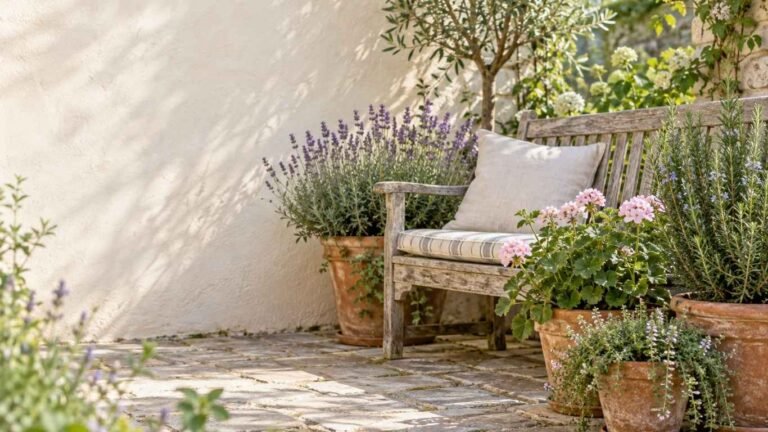
- Choose the pot. 30–40 cm (12–16 in) wide, with large drainage holes. Terracotta dries out faster than plastic, which helps.
- Mix the compost. Use a peat-free multipurpose or a peat-free loam-based compost of the John Innes No. 2 type, and mix in coarse grit, up to 25 per cent by volume.
- Plant at the same depth. Keep the base of the stems level with the surface. Do not bury them.
- Raise the pot. Stand it on pot feet or bricks so that water runs out freely. Do not use a saucer outdoors.
- Put it in full sun. The sunniest, most open place you have.
- Water it in, then ease off. Water well after planting and regularly through the first summer. After that, water when the top few centimetres of compost are dry.
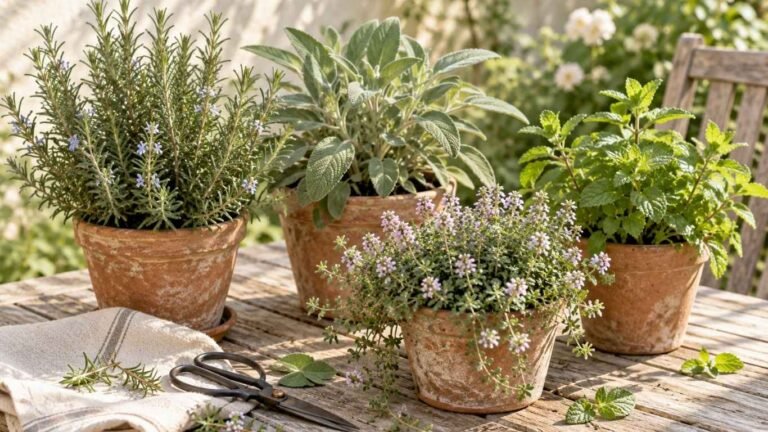
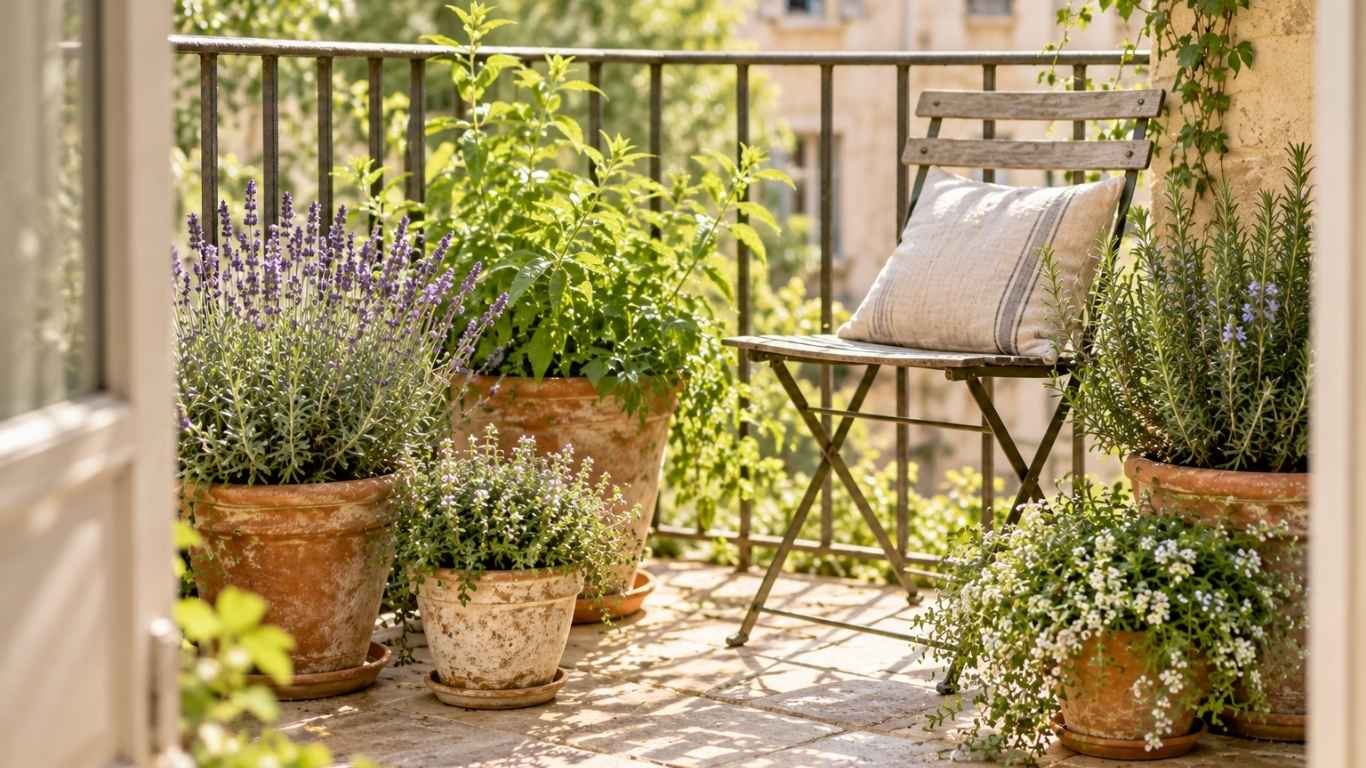
If you are planning a whole group of scented pots, lavender fits with rosemary and thyme, which want the same sun and the same gritty compost. Our beginner’s guide to creating a scented garden shows how to place them.
Watering lavender in pots through the year
- Spring and summer: container plants need regular watering in summer, because a pot dries out far faster than a border. Water thoroughly, then let the top of the compost dry before you water again.
- Autumn: reduce watering as growth slows.
- Winter: keep the containers fairly dry. The RHS suggests standing them in a cold greenhouse or in the rain shadow at the base of a wall.
A simple test beats any schedule. Push a finger into the compost to the second knuckle. If it is damp, wait.
Winter care for potted lavender
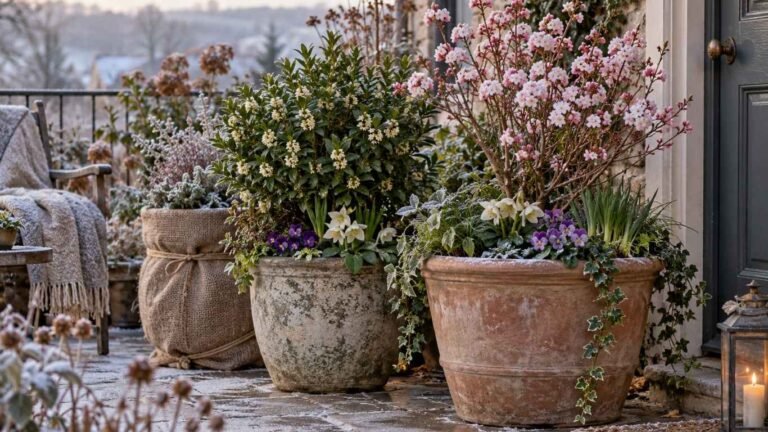
For English lavender, winter care is about rain more than frost. Move the pot to a sheltered spot and protect it from winter rain: in the lee of a wall, under the eaves, in a cold frame or in an unheated greenhouse.
In a hard continental winter, protect the roots as well. Group pots together and wrap the container in bubble wrap or straw so that the root ball does not freeze solid.
Tender lavenders need to be frost-free. A bright, cool, unheated room or porch works. Our guide to overwintering herbs and scented plants covers what else to bring in and when.
How and when to prune
Prune once a year, in late summer, just after flowering has finished. Remove the spent flower stalks and about 2.5 cm (1 in) of the leafy growth below them. That is all.
Two rules keep you out of trouble:
- Always leave green leaves below your cut.
- Never cut into bare, brown wood.
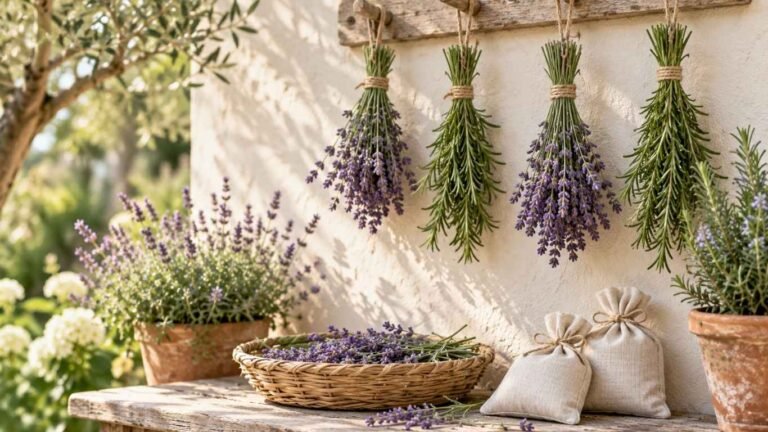
If you would like the flowers for drying, cut them earlier, when a third to a half of the buds on the stem have opened. We explain how to dry and use them in gifts from the garden.
Can a dying lavender be saved?
Sometimes. Check two things.
- Scratch a stem near the base with a fingernail. Green underneath means that stem is alive. Brown and dry means it is dead.
- Slide the plant out of the pot. Firm, pale roots can recover. Brown, soft roots that smell sour have rotted.
If the stems are green and the roots are firm, repot into fresh, gritty compost, move the pot into full sun and water sparingly. If the roots have rotted, the plant will not come back.
Either way, take cuttings from any healthy shoots. The RHS suggests softwood or semi-ripe cuttings from young plants in early to midsummer, or hardwood cuttings after flowering in late autumn. And if the plant is simply old, replace it without guilt. Older lavenders become straggly and very woody, and the RHS says plainly that they are best replaced.
Choosing lavender in pots for a cold-winter garden
For a cold-winter garden, choose compact English lavenders. All three below hold the RHS Award of Garden Merit and the same hardiness rating as ‘Hidcote’.
- ‘Hidcote’: about 50 cm (20 in) tall, deep violet-purple flowers in dense, aromatic spikes.
- ‘Imperial Gem’: about 40 cm (16 in) tall, dark violet flowers in early summer.
- ‘Beechwood Blue’: about 30 cm (12 in) tall, violet-blue and low-growing.
Choose a tender lavender only if you have a frost-free place for it in winter, and expect to replace it after a few years.
Pets
The ASPCA lists lavender as toxic to dogs, cats and horses if eaten, with nausea and vomiting as the signs. A pot on a terrace is rarely a problem, but if your pet chews plants, keep lavender out of reach and check the ASPCA entry for lavender.
Frequently asked questions
Why is my lavender dying in a pot?
The most common cause is wet compost. Lavender needs fast drainage, and in soggy soil the roots rot. Too little sun, a pot that is too small and cutting back into old wood are the other usual causes.
What size pot does lavender need?
A large one: 30–40 cm (12–16 in) in diameter, with large drainage holes. Small pots overheat and dry out in summer and freeze through in winter.
What is the best compost for lavender in pots?
A peat-free multipurpose or loam-based compost with plenty of coarse grit mixed in, up to 25 per cent by volume. The grit lets water drain quickly, which is what keeps the roots healthy.
How often should I water potted lavender?
Regularly in summer, letting the top of the compost dry between waterings. In winter keep it fairly dry and out of the rain. Check with a finger and do not water by the calendar.
Can lavender stay outside in a pot in winter?
English lavender usually can, if the pot is sheltered from winter rain and the roots are protected in hard frost. French and other tender lavenders need a frost-free place.
Can I cut lavender back hard to make it bushy again?
No. Lavender does not reshoot reliably from old, bare stems. Trim lightly every year after flowering and always leave green leaves below the cut. A plant that is already bare and woody is best replaced.
Your next step
Go and lift your lavender pot. If it is heavy and wet, tip it out and look at the roots today. If it is healthy, move it into your sunniest, driest corner before winter.
Tell us in the comments: what does your lavender look like right now, and what is it growing in?
Sources
- RHS: How to grow lavender
- RHS: Lavandula angustifolia ‘Hidcote’
- RHS: 10 award-winning lavenders
- RHS: Preventing winter damage
- Gardenia: How to dry lavender and preserve its fragrance
- ASPCA: Lavender
Last updated: 4 October 2026 · Scented Garden