Gifts From the Garden: Dried Herb Bundles, Scented Sachets and Seed Packets
In short: Four gifts from the garden need nothing more than string, paper and patience: kitchen herb bundles, scented sachets, scented sugar and packets of saved seed. Herbs take a few weeks to dry in a warm, dark, airy place and lavender takes 2 to 4 weeks, so cut in October or early November to give in December.
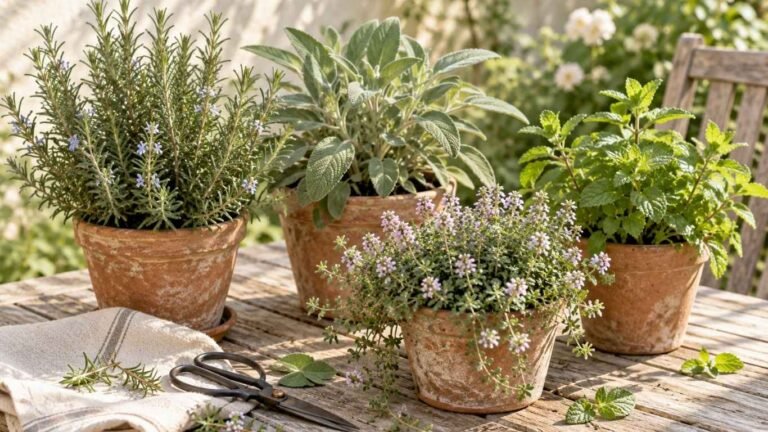
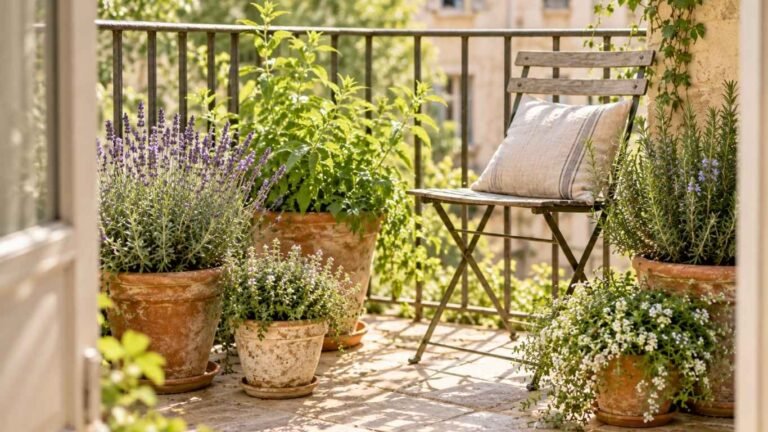
The best gifts from the garden are already growing in your pots. Rosemary, thyme and sage can be cut all year, the lemon verbena still has leaves until the first frost, and the lavender you dried in summer is waiting in a jar.
This guide gives you four small, dry, scented gifts, the timing for each and a schedule that ends with everything labelled before the holidays. None of them needs special equipment.
Table of Contents
Gifts from the garden start here: what to harvest in autumn
| Plant | What to cut | When | Best used for |
|---|---|---|---|
| Rosemary | Sprigs of leafy growth | All year | Kitchen bundles, sachets |
| Thyme | Small leafy sprigs | All year | Kitchen bundles |
| Sage | Leafy shoots | All year | Kitchen bundles |
| Lemon verbena | Leaves | Before the first frost | Sachets |
| Scented pelargonium | Leaves | Before the first frost, or from plants indoors | Sachets, scented sugar |
| Lavender | Flower stems, cut in summer | When a third to a half of the buds are open | Sachets |
| Sweet peas and other scented annuals | Ripe seed | When the pods turn from green to brown | Seed packets |
The Royal Horticultural Society (RHS) notes that rosemary, thyme and sage can be harvested all year round, though the soft new growth of late spring and summer has the best flavour. Autumn sprigs are firmer, and they still dry well.
Take a little from each plant. Light picking does no harm, but a hard cut into old wood in autumn can cost you the plant. If you are also deciding what to bring indoors, our guide to overwintering herbs and scented plants goes through them one by one.
How to dry herbs without losing their scent
The method is the same for every herb on the list. The RHS describes it in one line: hang up sprigs in a warm, dark, well-ventilated place for a few weeks, then, once fully dry, store the leaves in an airtight jar.
- Cut on a dry day, once any dew has gone.
- Strip the lower leaves from each stem, so nothing damp is trapped where the bunch is tied.
- Make small bunches. Tie them with a rubber band, which tightens as the stems shrink.
- Hang them upside down somewhere with low light and good ventilation. A spare room, a dry attic or a cupboard with the door ajar all work.
- Check them weekly. If you see any mould, move the bunch to a drier, airier place.
- Test for dryness. Leaves should crumble and stems should snap.
The three things that spoil dried herbs are light, damp and impatience. Sunlight fades the colour. A kitchen or bathroom is too steamy. And a bunch that goes into a jar before it is fully dry will go mouldy inside it.
Gift 1: Kitchen herb bundles
The simplest gift, and the one people use.
You need: rosemary, thyme and sage, kitchen string, a paper tag.
- Dry each herb separately, as above. They dry at different speeds.
- When fully dry, combine two or three sprigs of each into a small mixed bundle, about a hand’s length.
- Tie firmly with kitchen string, leaving a loop so that the bundle can hang by the cooker.
- Add a tag with the herbs and the month you cut them.
For a tidier gift, strip the dried leaves and fill a small jar instead. Write the plant and the year on the lid.
Gift 2: Scented sachets
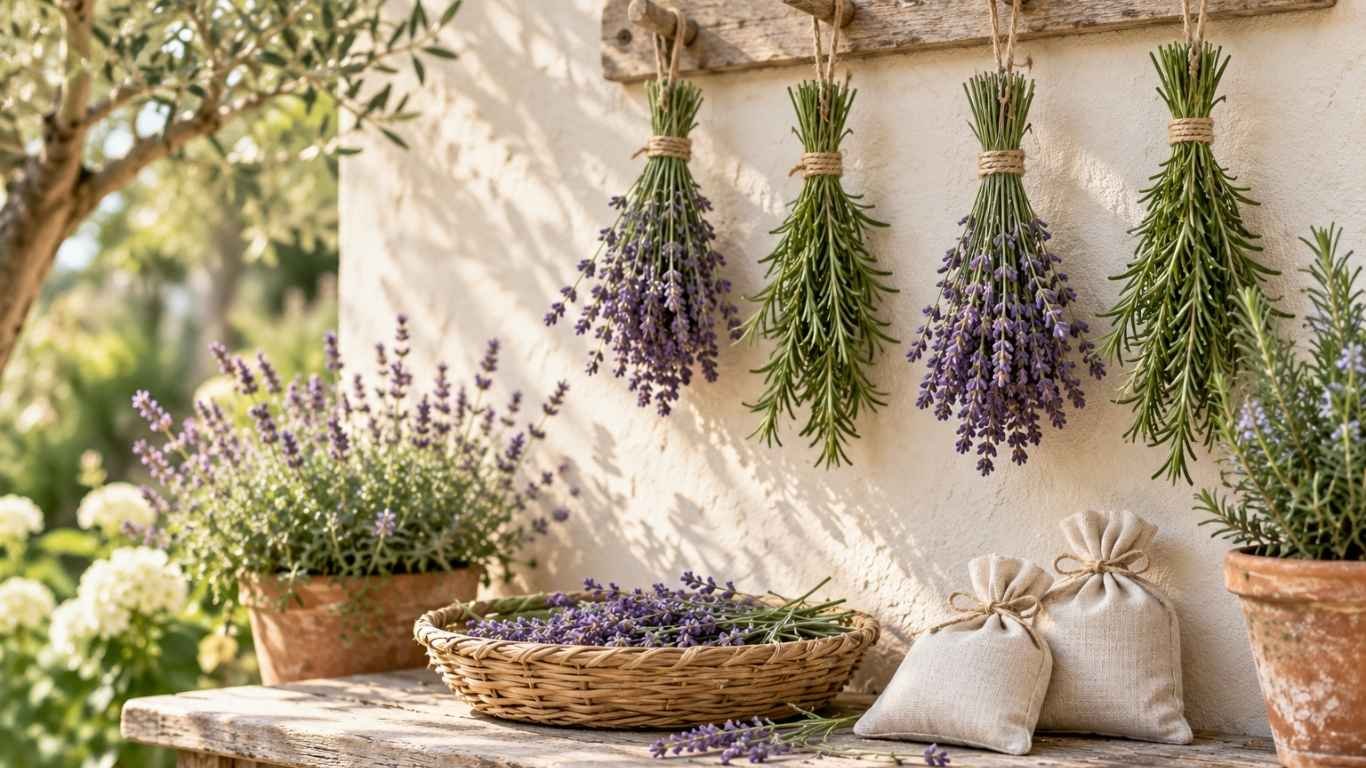
Lavender is the classic filling, and the timing of the cut decides how well it keeps its scent. Harvest when about one-third to one-half of the buds on the stem have opened, in the morning, after the dew has dried and before the heat of the day.
- Gather 10 to 15 stems into a bundle and tie it, firmly but without crushing the flowers.
- Hang it upside down in a dark, dry, well-ventilated place for 2 to 4 weeks.
- It is ready when the stems snap easily and the flowers feel crisp.
- Rub the buds off the stems over a bowl.
- Fill small fabric bags or squares of cotton tied with ribbon.
If you did not dry lavender this summer, make a leaf sachet instead. Lemon verbena has strongly lemon-scented leaves, and the RHS notes that scented pelargonium leaves can be used fresh or dried in pot-pourri. Dry the leaves flat on a rack or a sheet of paper, in a single layer, until they are crisp.
Stored in an airtight container somewhere cool and dark, dried lavender keeps its scent for several months to a year. Tell the person you give it to that squeezing the sachet now and then releases more scent.
Next summer, plan your lavender cut for drying. Pruning and harvest timing are both covered in lavender in pots: why it dies and how to grow it successfully.
Gift 3: Scented pelargonium sugar
The RHS notes that scented pelargonium leaves can be used to flavour sugars. A rose-scented variety such as ‘Attar of Roses’ gives a soft, floral sugar for baking or tea.
- Pick a few clean, dry leaves from a plant you have grown yourself, without any sprays.
- Layer them in a clean, dry jar with white sugar.
- Close the lid and leave the jar for about two weeks, shaking it now and then.
- Remove the leaves before giving the jar away.
Label it clearly as flavoured sugar, with the plant name and the date. Only use leaves from plants you know to be scented pelargoniums.
Gift 4: Seed packets
A packet of seed saved from your own scented plants is the gift that carries on into next year.
Collect. The RHS advises collecting ripe seed on a dry day, as soon as the seedheads ripen. Ripeness usually shows as a change in colour, from green to brown, black or red.
Dry. Lay the seedheads out to dry on a warm windowsill. Once the seed comes away, clean off the chaff around it, because that material can rot.
Pack. Put the seed into labelled paper packets or envelopes. Keep the packets in an airtight container until you give them. The RHS recommends adding a desiccant and storing seed in a refrigerator at 5°C (41°F).
Label it fully. Write the plant, the colour if you know it, the year and a short sowing note. For sweet peas, that note is: sow in October or November, or from late January to April, and plant out in April.
One thing to tell the person you give it to: usually only species come true from seed. Seedlings from a hybrid will be variable. So saved seed is a surprise as well as a gift, which is part of the charm. Mark every packet “for sowing, not for eating”.
A schedule for December gifts from the garden
| When | What to do |
|---|---|
| October | Cut rosemary, thyme and sage and hang them to dry. Pick lemon verbena and pelargonium leaves before the first frost. Collect and dry ripe seed. |
| Early November | Last chance to cut herbs for drying. Clean the seed and put it into packets. Start the scented sugar. |
| Late November | Strip dried leaves and lavender buds. Sew or tie the sachets. Make up the bundles. |
| Early December | Write the labels. Pack everything dry, in paper or glass. |
The schedule works backwards from the drying times: a few weeks for herbs and 2 to 4 weeks for lavender. If you start later, make fewer gifts and choose the quicker ones.
What to write on the label
A good label says what the gift is, not what it does.
- Write: the plant, where it grew, when it was cut and how to use it. “Rosemary and thyme from our terrace, cut in October. For roast potatoes.”
- Do not write: health promises. A lavender sachet smells lovely in a drawer. That is enough. Leave claims about sleep or calm off the label.
- Add a date, so that the bundle gets used while it still smells of something.
Pets and children
The ASPCA lists lavender, pelargoniums (often sold as geraniums) and lemon verbena as toxic to dogs and cats if eaten. Keep sachets out of reach of pets that chew, and mention it on the tag if the gift is going to a home with animals. Seed packets belong out of reach of small children. You can check any plant in the ASPCA plant database.
Frequently asked questions
What gifts can I make from my garden?
Dried herb bundles for the kitchen, scented sachets of lavender or lemon verbena, scented sugar and packets of saved seed. All four are dry, light and keep for months, and they need only string, paper, jars and fabric.
How long do herbs take to dry?
Rosemary, thyme and sage take a few weeks hung in a warm, dark, well-ventilated place. Lavender takes 2 to 4 weeks, depending on humidity and temperature. They are ready when the stems snap.
When should I cut lavender for sachets?
When about a third to a half of the buds on the stem have opened, in the morning after the dew has dried. That is when the fragrance is most concentrated.
How long do lavender sachets keep their scent?
Dried lavender stored cool, dark and airtight keeps its fragrance for several months to a year. In a sachet, squeezing the bag now and then releases more scent.
Can I give home-saved seeds as a gift?
Yes. Collect ripe seed on a dry day, dry it, clean off the chaff and pack it in labelled paper envelopes. Add the year and a sowing note. Seed from hybrid plants will not come true, so the flowers may differ from the parent.
Can I still harvest herbs for drying in October?
Yes. Rosemary, thyme and sage can be picked all year round. Summer growth has the best flavour, but autumn sprigs still dry well. Pick lightly, and do not cut into old wood.
Your next step
Cut three small bunches this weekend and hang them up. Everything else follows from that.
If this has made you want more to harvest next year, start with our beginner’s guide to creating a scented garden.
Tell us in the comments: which would you rather receive, a herb bundle, a sachet or a packet of seed?
Sources
- RHS: How to grow rosemary
- RHS: How to grow thyme
- RHS: How to grow sage
- RHS: How to dry flowers and foliage at home
- RHS: Scented-leaf pelargoniums
- RHS: Aloysia citrodora, lemon verbena
- RHS: Seed: collecting and storing
- RHS: How to grow lathyrus (sweet peas)
- Gardenia: How to dry lavender and preserve its fragrance
- ASPCA: Toxic and non-toxic plants
Last updated: 4 October 2026 · Scented Garden